


Many Springfield patients ask a very important question before committing to veneers. They want to know what happens to your real tooth when getting veneers in Springfield. It is a smart question — and one that deserves a thorough, honest answer. At Kelly Dental of Springfield, Dr. Chase Kelly believes every patient should fully understand the procedure before making any decisions about their smile.
Veneers are thin shells of porcelain bonded to the front surface of your teeth. They can correct discoloration, chips, gaps, and uneven shapes. But the process does involve permanent changes to your natural tooth structure. Understanding each step helps you make a confident, informed choice.
What Happens to Your Real Tooth During Veneer Preparation in Springfield
The most significant change to your natural tooth happens during the preparation stage. Your dentist removes a thin layer of enamel from the front surface of each tooth receiving a veneer. This removal is usually between 0.3 and 0.7 millimeters — roughly the thickness of a contact lens.
Enamel does not grow back. This makes the veneer process considered irreversible. Once your enamel is shaped, your teeth will always need some form of coverage or protection going forward. Dr. Kelly takes this step seriously and only recommends veneers when they are truly the right solution for a patient’s smile goals.
The preparation also involves lightly roughening the tooth surface. This texture helps the bonding agent grip the veneer securely. Your dentist may also adjust the edges of the tooth to ensure a natural-looking fit along the gumline.
Your Consultation and Shade Selection: Where the Process Begins
Before any tooth preparation begins, you will have a detailed consultation with Dr. Kelly. This appointment covers your smile goals, your dental health history, and whether veneers are the right fit for you. Not every tooth or patient is a good candidate — and that conversation happens first.
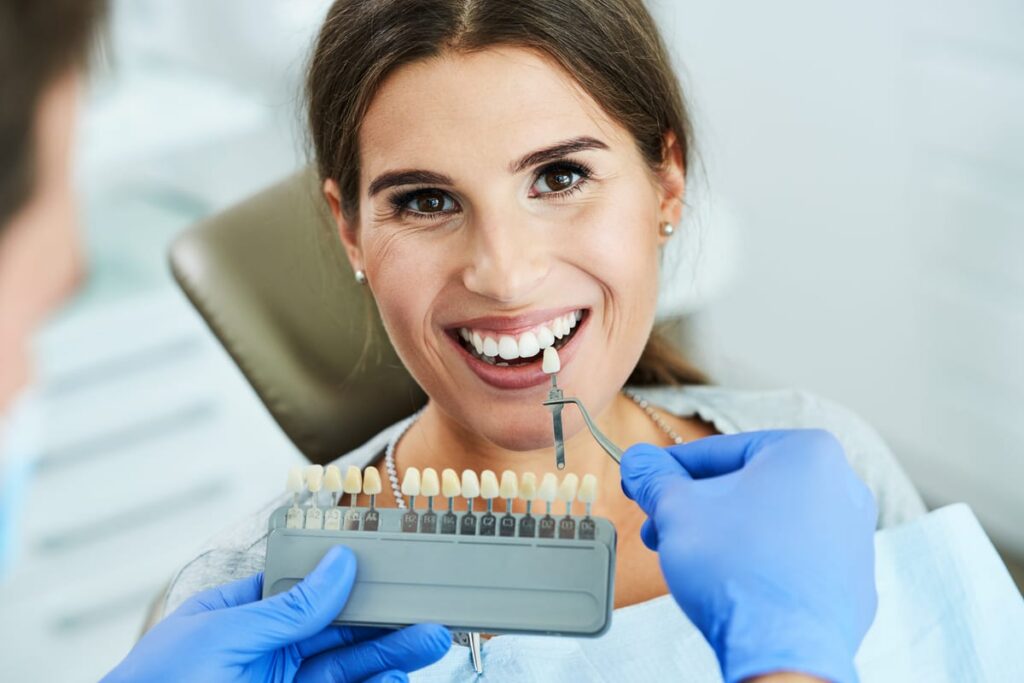
Shade selection is one of the most exciting parts of the process. You and Dr. Kelly will choose a porcelain color that matches or enhances your natural smile. Shade selection considers your skin tone, eye color, and the look of your surrounding teeth.
Here is what you can expect to discuss during your consultation:
- Your smile goals and which teeth will receive veneers
- The level of enamel removal needed for your specific case
- Porcelain shade options and how each will look in natural light
- Whether any other dental concerns need addressing before proceeding
- What the temporary phase will feel like and how long it lasts
This consultation sets the foundation for every step that follows. Taking the time to ask questions here makes the entire process smoother and more predictable.
The Temporary Phase: Protecting Your Tooth Between Appointments
After enamel removal, your teeth are not left exposed. Dr. Kelly places temporary veneers while your permanent porcelain shells are being crafted at the dental lab. This phase typically lasts one to two weeks.
Temporary veneers protect your prepared teeth from sensitivity and damage. They also give you a preview of how your final smile will look and feel. Some patients request small adjustments to the shape or length during this phase — and that feedback is valuable before the permanent veneers are finalized.
During the temporary phase, you should keep these tips in mind:
- Avoid sticky or hard foods that could dislodge the temporaries
- Be gentle when flossing around the temporary shells
- Notify the office if a temporary veneer comes off or feels uncomfortable
- Use this time to evaluate the shape and size of your new smile
Temporaries are not as strong or polished as permanent veneers. They are simply a protective bridge between preparation and your final result. Most patients adapt to them quickly within the first day or two.
Final Bonding: How Your Permanent Veneers Are Attached
Once your porcelain veneers return from the lab, you return to Kelly Dental of Springfield for your bonding appointment. Dr. Kelly removes the temporary veneers and thoroughly cleans each prepared tooth. He then checks the fit and shade of each permanent veneer before applying any adhesive.
Small adjustments in shade or shape can still be made at this stage using tinted bonding cement. This gives Dr. Kelly precise control over the final appearance of your smile. When both you and Dr. Kelly are satisfied with the fit and look, the bonding process begins.
A special light-activated dental cement bonds the veneer to your tooth surface. Dr. Kelly applies the cement, positions the veneer, and cures it with a curing light. This hardens the bond in seconds and creates a durable, lasting connection between the porcelain shell and your natural tooth.
After bonding, Dr. Kelly trims any excess cement and checks your bite carefully. He makes minor adjustments to ensure your teeth come together naturally and comfortably. A follow-up appointment is sometimes scheduled to confirm everything has settled well.
Long-Term Impact on Your Natural Tooth Structure
Your natural tooth remains largely intact beneath the veneer. Only the outermost enamel layer is altered during preparation. The inner dentin and root structure stay untouched. This is very different from a dental crown, which requires significantly more tooth reduction on all sides.
Veneers can last 10 to 20 years with proper care. Regular brushing, flossing, and routine dental visits help protect both the veneers and your underlying teeth. Avoiding habits like nail biting, grinding, or chewing on hard objects also extends the life of your veneers significantly.
If a veneer chips or wears down over time, it can be replaced. Your natural tooth underneath is preserved as long as you maintain good oral health and attend your regular checkups at Kelly Dental of Springfield.
If you ever experience a dental emergency during your veneer journey or at any other time, Emergency Dentistry Springfield is available to help Springfield patients get prompt, expert care. For patients interested in tooth replacement alongside cosmetic work, Dental Implants Springfield may be another option worth exploring with Dr. Kelly.
Is the Veneer Process Right for You?
Veneers are a powerful cosmetic tool — but they are not the right choice for every patient or every situation. Patients with significant tooth decay, gum disease, or insufficient enamel may need to address those issues first. Dr. Kelly evaluates each patient individually to ensure veneers will deliver long-lasting, healthy results.
Understanding what happens to your real tooth when getting veneers in Springfield empowers you to make the best decision for your smile and your health. The process involves real, permanent changes — but in the right hands, it produces truly transformative outcomes. Dr. Chase Kelly and the team at Kelly Dental of Springfield are here to guide you through every step with honesty and care. Book Now to schedule your appointment with our team.
Frequently Asked Questions
Does getting veneers hurt?
Most patients experience minimal discomfort during the veneer process. Local anesthesia is used during enamel preparation to keep you comfortable. Some sensitivity is normal in the days following preparation, but it typically resolves once the permanent veneers are bonded in place.
How much enamel is actually removed for veneers?
The amount of enamel removed is very small — usually between 0.3 and 0.7 millimeters. This is far less than what is removed for a dental crown. However, since enamel does not regenerate, the process is considered permanent and irreversible.
Can I eat normally with temporary veneers?
You should eat carefully during the temporary phase. Avoid sticky, crunchy, or very hard foods that could dislodge your temporaries. Soft foods and mindful chewing habits will protect your temporary veneers until your permanent ones are bonded.
How long do porcelain veneers last?
Porcelain veneers typically last between 10 and 20 years with proper care. Regular dental checkups, good oral hygiene, and avoiding habits like teeth grinding help maximize their lifespan. If a veneer chips or wears down, it can be professionally replaced.
What if I do not like the shade I chose after bonding?
Shade selection is done carefully before any bonding takes place. Dr. Kelly places the veneers for a trial fit and evaluates the shade together with you in natural and office lighting. Adjustments to color can still be made using tinted bonding cement before the final cure, giving you control over your final result.