


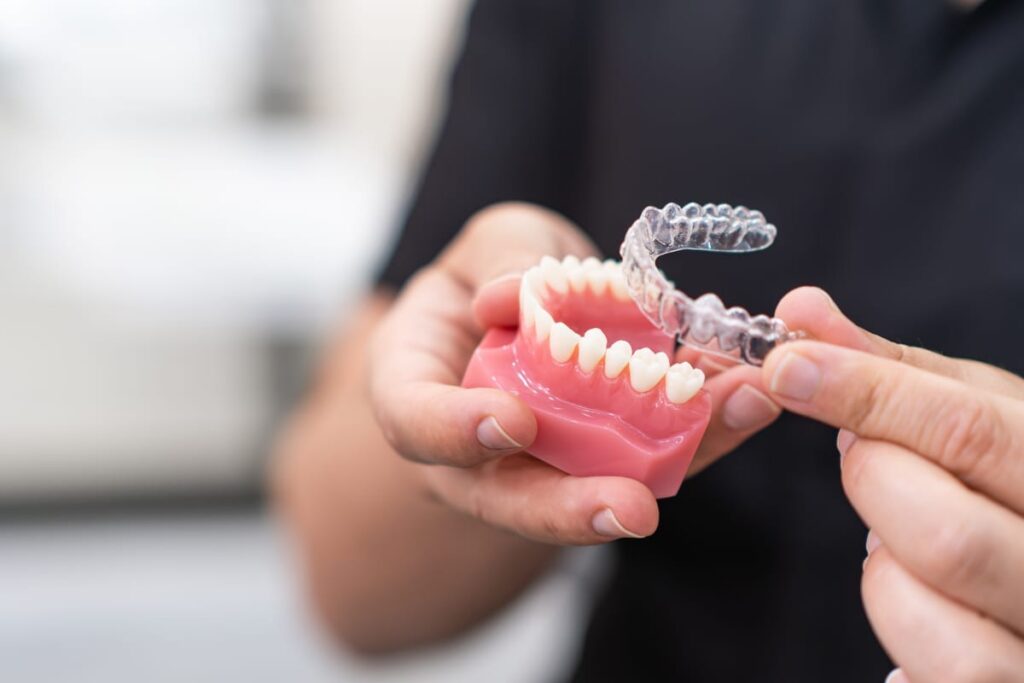
One of the most common questions we hear at Kelly Dental of Springfield is simple: why does Invisalign cost so much more for some patients than others? Understanding why Invisalign costs vary so much between patients in Springfield can feel confusing at first. The truth is, Invisalign is not a one-size-fits-all treatment. Your unique smile, dental history, and treatment goals all shape the final investment you will make.
Dr. Chase Kelly and the team at Kelly Dental of Springfield help patients navigate these differences every day. This article breaks down the key factors that influence your Invisalign cost — so you can feel informed before your consultation.
Case Complexity Is the Biggest Cost Driver in Springfield
The single largest factor affecting Invisalign pricing is how complex your case is. A mild crowding issue requires far fewer aligners than a full bite correction. More complex cases demand more planning, more aligner sets, and more clinical oversight throughout treatment.
Dentists classify Invisalign cases into tiers. Invisalign Lite handles minor corrections and uses fewer trays. Comprehensive Invisalign treatment addresses significant misalignment and bite issues. The more your teeth need to move, the more resources go into achieving that result.
Here are examples of conditions that typically increase case complexity:
- Significant overbite or underbite
- Severe crowding or widely spaced teeth
- Open bite or crossbite correction
- Rotated or tilted teeth requiring precise movement
- Previously treated cases needing re-correction
Dr. Kelly evaluates each patient individually. Your complexity level is not determined by a guess — it is determined by detailed digital scans and clinical assessment during your initial consultation.
How the Number of Aligners Affects Your Total Investment
Invisalign treatment works by moving your teeth in small, controlled stages. Each stage uses a new set of custom aligners. More movement means more stages, and more stages means more aligners produced specifically for you.
Each aligner set is precision-manufactured by Invisalign’s labs using your digital impressions. That manufacturing process has real costs. A patient needing 14 aligner sets will pay less than a patient needing 40 sets — simply because of what goes into creating each one.
It is important to understand that the number of aligners is determined by your clinical needs. Your dentist does not choose fewer aligners to save you money. The treatment plan is built to achieve the best outcome for your teeth, and the aligner count follows from that goal.
This is why two patients sitting in the same waiting room in Springfield can receive very different quotes. Their smiles — and their needs — are genuinely different.
Refinements and Mid-Treatment Adjustments Add to the Cost
Teeth do not always move exactly as planned. Invisalign treatment sometimes requires refinements — additional aligner sets created partway through or at the end of treatment to fine-tune results. Refinements are a normal part of complex cases.
Some practices include a set number of refinements in their treatment fee. Others charge for them separately. Understanding how your dental provider handles refinements is an important question to ask during your consultation.
Factors that may lead to refinements include:
- Teeth responding slower than predicted
- Attachments that needed repositioning
- Minor corrections needed after the initial series ends
- Patient compliance issues affecting treatment progress
Dr. Chase Kelly builds transparent treatment plans so patients understand what is included from the start. Knowing what is covered upfront helps you avoid surprises later in your Invisalign journey.
Additional Clinical Factors That Influence Invisalign Pricing
Beyond case complexity and aligner count, several other clinical factors play a role in your overall Invisalign cost. These are worth understanding as you compare options in the Springfield area.
Attachments are small tooth-colored bumps bonded to your teeth. They help aligners grip your teeth for more controlled movement. More attachments mean more clinical time and precision. Not all patients need them — but patients with complex cases often do.
Interproximal reduction (IPR) is a process where tiny amounts of enamel are removed between teeth to create space. It is safe and painless, but it requires clinical skill and time. Cases that require IPR add a layer of complexity to the overall treatment plan.
Retention after Invisalign is also part of the long-term picture. Once your active treatment ends, retainers keep your teeth in their new positions. Retainer costs vary and are worth factoring into your planning from the beginning.
Finally, the experience and credentials of your provider matter. A highly trained general dentist with advanced Invisalign experience brings a level of oversight that supports better outcomes — and that expertise is reflected in your overall treatment fee.
What to Expect at Your Invisalign Consultation in Springfield
The best way to understand your personal Invisalign cost is to schedule a consultation with Dr. Chase Kelly. During that visit, Dr. Kelly will take digital scans of your teeth and review your bite, spacing, and alignment in detail.
From there, you will receive a customized treatment plan. This plan outlines the expected number of aligner stages, whether refinements may be needed, and what attachments your case requires. You will leave with a clear picture of what your treatment involves and what it will cost — specific to you.
Kelly Dental of Springfield also provides a full range of services beyond Invisalign. If you ever face a dental emergency, the practice offers Emergency Dentistry Springfield Springfield to help you get care when you need it most. For patients who need tooth replacement, Dental Implants Springfield Springfield are also available at the practice.
Understanding all your options helps you make confident decisions about your oral health — and Dr. Kelly is here to guide you every step of the way. Book Now to schedule your appointment with our team.
Frequently Asked Questions
Why do Invisalign costs vary so much between patients in Springfield?
Invisalign pricing varies because every patient’s teeth are different. Case complexity, the number of aligners needed, whether refinements are required, and clinical factors like attachments all contribute to the final cost. A mild correction costs less than a comprehensive bite and alignment overhaul.
Does a more complex Invisalign case always take longer?
Generally, yes. More complex cases require more aligner stages, which means more time in treatment. However, your compliance with wearing aligners for the recommended hours each day also affects your overall treatment timeline significantly.
Are refinements always included in the Invisalign fee?
Not always. Some dental practices include refinements in their quoted fee, while others charge for them separately. It is important to ask your dentist about their refinement policy before starting treatment so you are not caught off guard mid-treatment.
Do attachments make Invisalign more expensive?
Attachments add clinical time and complexity to your treatment. They are not a separate add-on charge in most cases, but they are part of what makes complex cases cost more overall. Your dentist will let you know during the consultation whether your case requires attachments.
How can I find out what my personal Invisalign cost would be in Springfield?
The only accurate way to find out is through a personalized consultation with a qualified dentist. Dr. Chase Kelly at Kelly Dental of Springfield evaluates each patient individually using digital scans and a full clinical review to provide a treatment plan and cost estimate specific to your smile.