


When you lose a tooth, the choices can feel overwhelming. Implant dentures vs. traditional bridges — which actually lasts longer in Springfield? That question comes up constantly in our office. Understanding the real differences helps you make a confident, informed decision about your smile and long-term oral health.
At Kelly Dental of Springfield, Dr. Chase Kelly helps patients weigh these options every day. This article breaks down longevity, function, and fit so you know exactly what to expect from each treatment path.
Understanding Implant Dentures vs. Traditional Bridges in Springfield
A traditional dental bridge fills a gap by anchoring an artificial tooth to the healthy teeth on either side. Those anchor teeth, called abutments, must be filed down to support crowns. That process permanently alters otherwise healthy tooth structure.
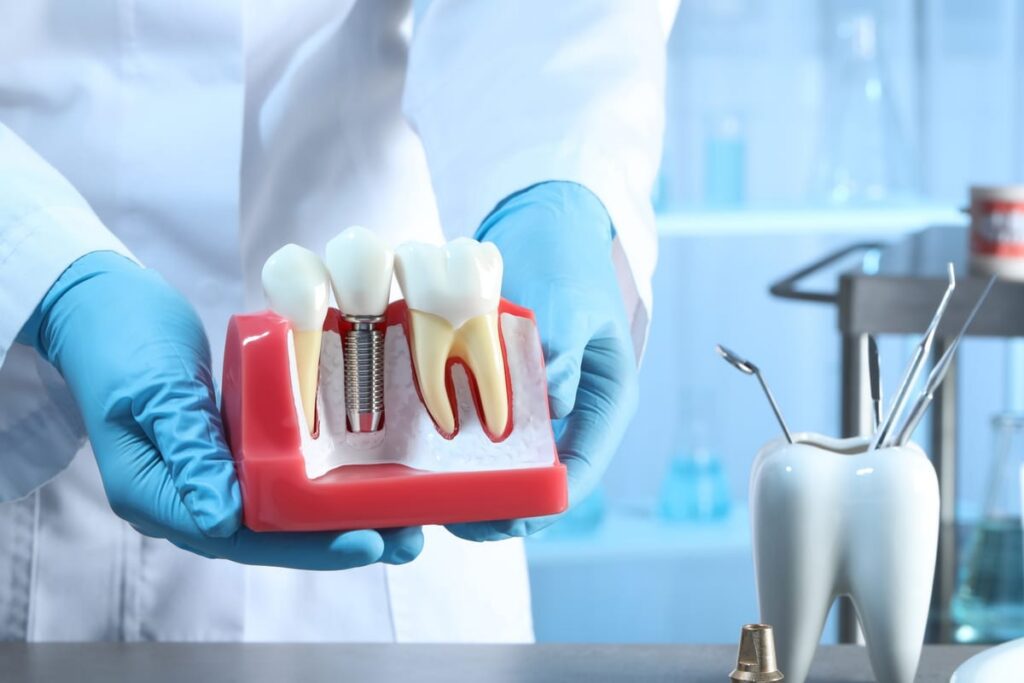
Implant dentures, by contrast, use titanium posts placed directly into the jawbone. The implant acts as an artificial root. A crown, bridge, or full arch of teeth then attaches securely to that post. No neighboring teeth are touched or altered.
Both options restore your smile. But they differ significantly in how they interact with your jaw, your gum tissue, and your remaining natural teeth. Knowing those differences is the first step toward the right choice.
Which Option Actually Lasts Longer?
Longevity is often the deciding factor for Springfield patients comparing these two restorations. Traditional bridges typically last 10 to 15 years with proper care. After that, the bridge may need replacement. The abutment teeth underneath can also develop decay or wear over time.
Dental Implants Springfield have a much longer track record. Studies show implants can last 25 years or more — and many patients keep them for life. The titanium post fuses with the jawbone in a process called osseointegration. That fusion makes the implant extremely stable and durable.
Here is a quick side-by-side comparison of longevity factors:
- Traditional bridge lifespan: 10–15 years on average
- Dental implant lifespan: 25+ years, often lifetime
- Bridge risk: Decay under crowns can shorten lifespan
- Implant risk: Bone loss or gum disease can affect stability if untreated
- Maintenance: Bridges require floss threaders; implants are brushed normally
If longevity is your top priority, implants have a clear advantage. However, your bone density, gum health, and overall medical history all affect whether implants are the right fit for you.
How Each Option Affects Your Jawbone and Oral Health
One of the most important — and often overlooked — differences involves bone health. When you lose a tooth, the jawbone beneath it begins to shrink. This process is called bone resorption. It can change your facial shape over time.
Traditional bridges do not stop bone loss. The artificial tooth sits above the gum line and provides no stimulation to the bone underneath. Over years, you may notice sunken areas around the bridge site.
Implants solve this problem directly. The titanium post stimulates the jawbone just like a natural tooth root. Bone resorption slows or stops entirely. Your facial structure stays more intact long-term. This is a major reason many dentists consider implants the gold standard for tooth replacement.
Benefits of implants for overall oral health include:
- Preservation of surrounding jawbone density
- No alteration of adjacent healthy teeth
- Easier cleaning with standard brushing and flossing
- Reduced risk of gum recession around the restoration
- More natural bite force and chewing function
When a Traditional Bridge May Be the Better Choice
Implants are not always the right answer for every patient in Springfield. Several situations make traditional bridges a more practical option. It is important to consider your full health picture before deciding.
A bridge may be better suited if you:
- Have significant bone loss and are not a candidate for grafting
- Need a faster timeline for tooth replacement
- Have certain health conditions that affect healing after oral surgery
- Prefer a non-surgical approach to tooth restoration
Traditional bridges are still a reliable and proven treatment. They restore chewing function, prevent tooth shifting, and improve appearance. For patients who need an immediate solution, a bridge can be placed in just a few appointments without a surgical procedure.
Dr. Kelly always evaluates each patient individually. No single solution works for everyone. A thorough exam, including X-rays and a review of your dental history, guides the recommendation.
What Springfield Patients Should Know About Cost and Value
Cost is a real consideration for most patients. Bridges typically have a lower upfront cost compared to implants. However, when you factor in replacement costs over a lifetime, the value equation often shifts.
A bridge may need to be replaced two or three times over 30 years. Each replacement adds to the total expense. Implants cost more initially but rarely require full replacement. The crown on top of an implant may need replacing after 15 to 20 years, but the implant post itself typically stays in place permanently.
Also consider indirect costs. If the abutment teeth under a bridge develop decay or fractures, you may face additional restorative work. Implants remove that risk entirely since neighboring teeth are left untouched.
If you ever experience a dental emergency related to a failing bridge or damaged tooth, Emergency Dentistry Springfield is available at Kelly Dental to help you quickly. Prompt care prevents small problems from becoming major ones.
Making Your Decision: Questions to Ask Dr. Kelly
Every patient’s situation is unique. Bone volume, gum health, tooth location, and personal goals all shape which option works best. Coming prepared with the right questions helps you get the most from your consultation.
Consider asking:
- Am I a good candidate for dental implants based on my bone density?
- How many teeth need to be replaced, and how does that affect my options?
- What is the realistic lifespan of each option for my specific case?
- What does the recovery timeline look like for implants versus a bridge?
- What maintenance will each option require long-term?
Dr. Chase Kelly and the team at Kelly Dental of Springfield take time to answer every question thoroughly. The goal is always patient education — not pressure. You deserve to feel confident before any treatment begins.
Conclusion
When weighing implant dentures vs. traditional bridges, longevity, bone health, and long-term value all point toward implants as the stronger investment for most patients. That said, bridges remain a solid option for those who need a faster or non-surgical solution. The right choice depends entirely on your individual oral health, lifestyle, and goals. Dr. Chase Kelly at Kelly Dental of Springfield is here to walk you through every detail and help you decide with confidence. Book Now to schedule your appointment with our team.
Frequently Asked Questions
How long do dental implants last compared to traditional bridges?
Dental implants can last 25 years or more, with many patients keeping them for a lifetime. Traditional bridges typically last 10 to 15 years before needing replacement. The implant post itself rarely needs to be replaced, though the crown on top may require renewal after 15 to 20 years.
Is getting a dental implant more painful than getting a bridge?
Most patients report that implant placement is more comfortable than they expected. Local anesthesia is used during the procedure, and any post-surgical discomfort is typically manageable with over-the-counter pain relief. A bridge requires less recovery time, but implants often involve less long-term sensitivity since neighboring teeth are not altered.
Can anyone get dental implants, or are there restrictions?
Most healthy adults are good candidates for dental implants. However, adequate jawbone density is required to support the titanium post. Patients with significant bone loss may need a bone graft first. Certain medical conditions can also affect healing. Dr. Kelly evaluates each patient individually to determine candidacy.
Do implant dentures look and feel natural?
Yes. Implant-supported restorations are designed to closely match the look, feel, and function of natural teeth. Because the implant integrates with the jawbone, it provides a stable foundation that does not shift or move. Most patients find they forget the implant is there during everyday activities like eating and speaking.
What happens if a dental bridge fails or gets damaged?
A damaged or failing bridge can sometimes be repaired, but in many cases it needs to be fully replaced. If the abutment teeth beneath the bridge have developed decay or structural damage, more extensive restorative work may be needed. Seeking prompt dental care when you notice problems with a bridge is always the best approach to protecting your surrounding teeth.