


If you’ve been putting off dental implants because you’re not sure what to expect, you’re not alone. Many patients in Springfield, MO feel anxious simply because the process feels like a mystery. Understanding what actually happens inside your dental implant procedure in Springfield can make a real difference in your confidence. Dr. Chase Kelly and the team at Kelly Dental of Springfield are here to walk you through every single step.
Your First Step: The Implant Consultation and Planning Phase
Everything begins with a thorough consultation. Dr. Kelly will examine your mouth, review your dental and medical history, and take digital X-rays or a 3D cone beam scan. This imaging helps him see your jawbone density, nerve locations, and available space. Detailed planning at this stage is what makes the procedure safe and predictable.
During this visit, you’ll discuss your goals openly. Dr. Kelly will explain which implant option fits your situation — whether that’s a single tooth implant or the All-on-4 system for full-arch restoration. You’ll also talk through the timeline so you know exactly what’s ahead. No surprises, no guesswork.
Some patients need preparatory work before implant placement. This might include a tooth extraction, bone grafting, or treatment for gum disease. These steps set the foundation for a successful implant. Skipping them would compromise the long-term result.
What Actually Happens During the Implant Placement Appointment in Springfield
On the day of your implant surgery, comfort is the top priority. Dr. Kelly will administer local anesthesia to fully numb the treatment area. Sedation options are also available for patients who feel nervous. You won’t feel pain — you may feel some pressure, but that’s completely normal.
Once you’re comfortable, Dr. Kelly makes a small incision in the gum tissue. This exposes the jawbone underneath. He then uses a specialized drill to create a precise channel in the bone. This step is performed slowly and carefully to protect surrounding structures.
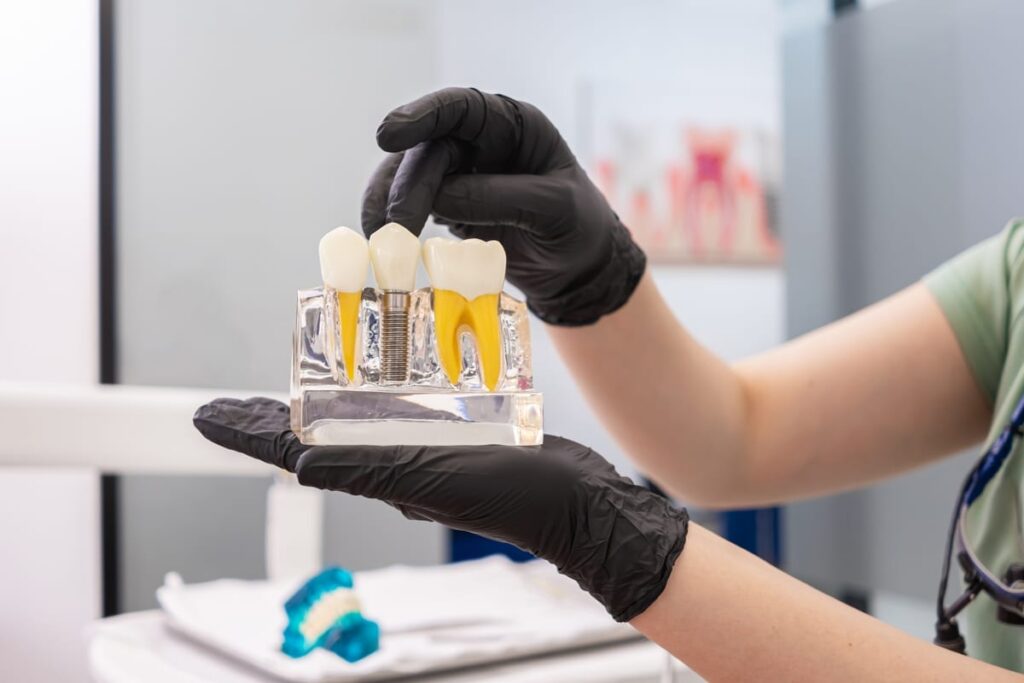
The titanium implant post is then gently inserted into that channel. Titanium is used because the body accepts it naturally. The gum tissue is stitched closed over or around the implant. The entire placement appointment typically takes one to two hours per implant.
- Local anesthesia is applied before any work begins
- A small incision exposes the jawbone
- A precision channel is drilled into the bone
- The titanium post is placed into the channel
- Gum tissue is sutured closed to begin healing
The Healing Phase: Osseointegration Explained
After placement, your body begins an incredible biological process called osseointegration. This is where the jawbone slowly grows around and fuses with the titanium post. It’s what gives dental implants their unmatched stability. This process takes anywhere from three to six months depending on the patient.
During this healing window, Dr. Kelly may place a temporary crown or restoration. This protects the site and keeps your smile looking natural. You’ll attend check-up appointments so the team can monitor your progress. Most patients return to normal daily activities within a few days of surgery.
Mild swelling, soreness, and bruising are common in the first week. Over-the-counter pain relievers and cold compresses manage most discomfort effectively. Dr. Kelly’s team will give you detailed aftercare instructions before you leave. Following those instructions closely speeds up healing and protects your results.
- Rest for 24–48 hours after the procedure
- Eat soft foods during the initial healing period
- Avoid smoking — it significantly slows osseointegration
- Keep the area clean with gentle rinsing
- Attend all scheduled follow-up appointments
Placing the Abutment and Your Final Crown
Once osseointegration is complete, Dr. Kelly will attach a small connector piece called an abutment to the implant post. This piece sits just above the gum line. It serves as the anchor point for your final crown or restoration. This appointment is straightforward and usually requires minimal anesthesia.
Impressions or digital scans of your mouth are then taken. A dental lab uses these to craft your custom crown. The crown is color-matched to your surrounding teeth for a completely natural appearance. It’s built to handle the full force of normal chewing.
At your final appointment, Dr. Kelly places and secures the permanent crown onto the abutment. He’ll check your bite carefully and make small adjustments as needed. Once everything feels right, you’ll leave with a fully restored smile. The implant looks, feels, and functions exactly like a natural tooth.
Why Springfield Patients Choose Dental Implants Over Other Options
Dental implants outperform other tooth replacement solutions in nearly every category. They preserve jawbone, which prevents the sunken facial appearance that often follows tooth loss. Unlike removable dentures, implants never slip or require adhesives. They also don’t rely on neighboring teeth for support the way bridges do.
Patients who want to explore all their restoration options often ask about Cosmetic Dentistry Springfield Springfield services. This allows them to combine implants with other smile improvements. Some patients also compare implants to Dentures Springfield Springfield before making their decision. Dr. Kelly is happy to walk through the pros and cons of each approach.
The benefits of choosing implants are significant and long-lasting:
- Implants can last a lifetime with proper care
- They preserve the natural structure of your jawbone
- No dietary restrictions once fully healed
- They look identical to natural teeth
- No removable parts to manage or lose
Conclusion: Take the First Step Toward a Restored Smile
Understanding what actually happens inside your dental implant procedure in Springfield removes much of the fear surrounding this treatment. The process is methodical, comfortable, and designed with your long-term health in mind. Dr. Chase Kelly and the team at Kelly Dental of Springfield guide patients through every phase with patience and expertise. You deserve a smile that functions fully and feels completely natural. Book Now to schedule your appointment with our team.
Frequently Asked Questions
How long does the entire dental implant process take from start to finish?
The full process typically takes three to nine months. This includes the consultation, implant placement, the osseointegration healing period, and the final crown placement. The exact timeline depends on whether preparatory procedures like bone grafting are needed first.
Is the dental implant procedure painful?
Most patients report very little pain during the actual procedure. Local anesthesia fully numbs the treatment area before anything begins. Post-procedure soreness is common but manageable with over-the-counter pain relievers and typically resolves within a week.
Am I a good candidate for dental implants in Springfield?
Most healthy adults who are missing one or more teeth are good candidates. Dr. Kelly will evaluate your jawbone density, gum health, and overall oral health during your consultation. Some patients need preparatory treatment first, but that doesn’t necessarily disqualify them from getting implants.
What is the difference between a single tooth implant and All-on-4?
A single tooth implant replaces one missing tooth with one implant post and one crown. All-on-4 uses just four strategically placed implants to support a full arch of replacement teeth. All-on-4 is ideal for patients who have lost most or all of their teeth on one or both arches.
How do I care for my dental implant after the procedure?
Care for implants just like you would natural teeth — brush twice daily, floss regularly, and attend routine dental check-ups. Avoid smoking and limit hard or sticky foods during the initial healing phase. With proper care, dental implants can last many decades.