


If you’ve been researching tooth replacement, you’ve probably already noticed that pricing varies widely. Understanding dental implants — what actually drives the price and your options in Springfield — helps you make a confident, informed decision. At Kelly Dental of Springfield, Dr. Chase Kelly believes every patient deserves clear answers before committing to any treatment. This guide breaks down the real factors behind implant costs so you know exactly what you’re paying for.
Why Dental Implant Costs Vary So Much
Dental implants are not a one-size-fits-all procedure. Each patient starts with a unique situation, and that directly affects the final investment. Bone density, gum health, and the number of missing teeth all play a role. Even your jaw anatomy can influence how straightforward or complex the process becomes.
The materials used also matter significantly. High-quality titanium implant posts and ceramic crowns cost more than budget alternatives. However, premium materials tend to last far longer and perform better over time. Choosing quality upfront often means fewer replacements or repairs down the road.
The experience level of your dental team is another key factor. A skilled implant dentist invests in advanced training, updated technology, and precision tools. That investment reflects in the overall cost — but it also reflects in your results and safety throughout the procedure.
Breaking Down the Components That Drive the Price
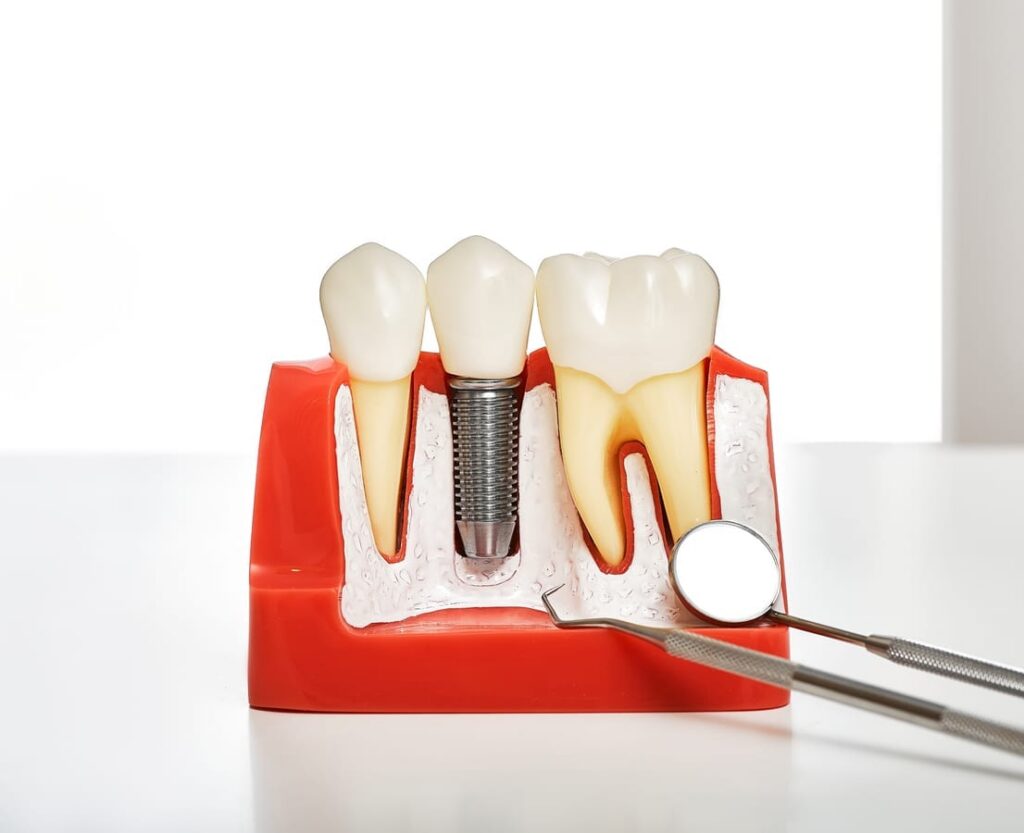
Most patients are surprised to learn that a dental implant is actually made up of several distinct parts. Each component adds to the total cost, and understanding them helps the overall number make more sense.
- The implant post: A titanium screw placed directly into your jawbone, acting as the artificial root
- The abutment: A small connector piece that links the post to the visible crown
- The dental crown: The custom-made tooth that sits on top and looks completely natural
- Preparatory procedures: Bone grafts or tooth extractions needed before implant placement
- Imaging and diagnostics: X-rays and 3D scans used to plan precise placement
Each of these steps requires time, materials, and clinical expertise. When you see a final quote, it typically reflects all these components combined. Asking your dentist to itemize the estimate helps you understand exactly where your investment goes.
Single Tooth Implants vs. All-on-4: Comparing Your Options in Springfield
Dental Implants Springfield come in several formats depending on how many teeth you need replaced. A single tooth implant is ideal when one tooth is missing and surrounding teeth are healthy. It preserves your natural bite and requires no alteration to neighboring teeth. This makes it one of the most conservative and effective options available.
All-on-4 dental implants take a different approach. This treatment replaces an entire arch of teeth using just four strategically placed implants. It’s a powerful solution for patients who have lost most or all of their teeth. All-on-4 can also be more cost-effective than replacing every tooth individually.
The right option depends entirely on your specific needs. Dr. Chase Kelly evaluates bone structure, overall oral health, and your long-term goals before recommending a treatment path. There is no universal answer — only the right answer for your mouth.
Financing Options That Make Implants More Accessible
The upfront cost of dental implants can feel intimidating for many patients. The good news is that most dental practices, including Kelly Dental of Springfield, offer financing options to make treatment more manageable. Breaking the total into monthly payments allows you to start treatment sooner rather than waiting indefinitely.
Third-party financing programs are widely available in dental offices. These plans often feature low or no-interest options for qualified applicants. Applying is typically quick, and many patients receive a decision the same day. This means your path to a healthier smile doesn’t have to wait on your budget.
Some practices also offer in-house payment arrangements or phased treatment plans. Phasing your treatment lets you complete different stages over time, spreading costs across multiple appointments. Talk openly with the team at Kelly Dental about what works best for your financial situation.
Is the Investment Worth It? The Long-Term Value of Dental Implants
Dental implants consistently outperform other tooth replacement options when you consider their lifespan. With proper care, implants can last decades — sometimes a lifetime. Traditional bridges or dentures often require replacement or adjustment every several years. Over a 20-year period, implants frequently prove to be the more economical choice.
Beyond longevity, implants protect your jawbone. When a tooth is lost, the underlying bone begins to deteriorate without stimulation. An implant post actively prevents that bone loss by mimicking a natural tooth root. This preserves your facial structure and prevents the sunken appearance that can develop with missing teeth over time.
- Restores full chewing function with natural bite force
- Looks and feels identical to natural teeth
- Prevents bone loss in the jaw
- Does not require altering healthy neighboring teeth
- Eliminates the discomfort associated with removable dentures
- Supports long-term oral health and hygiene
Patients who invest in implants often report a significant improvement in confidence and quality of life. Eating, speaking, and smiling comfortably again makes a real difference in daily living. It’s an investment in your health, not just your appearance.
What to Expect at Your Implant Consultation at Kelly Dental
Your journey begins with a thorough consultation with Dr. Chase Kelly. He will review your dental and medical history, take digital X-rays, and assess your bone structure. This information shapes a personalized treatment plan tailored to your specific needs.
During your consultation, you’ll receive a detailed breakdown of the recommended treatment and associated costs. Dr. Kelly and his team take the time to answer every question you have. No one leaves feeling rushed or confused about their options. Transparency is a core value at Kelly Dental of Springfield.
If a dental emergency ever arises during your implant process, the team is also equipped to help. Emergency Dentistry Springfield services are available to address urgent concerns quickly and compassionately. Knowing your dental home handles all your needs — planned or unexpected — provides real peace of mind.
Understanding dental implants — what actually drives the price and your options in Springfield — puts you in control of your dental care decisions. Dr. Chase Kelly and the team at Kelly Dental of Springfield are here to guide you every step of the way. Book Now to schedule your appointment with our team.
Frequently Asked Questions
What makes dental implants more expensive than dentures or bridges?
Dental implants involve a surgical procedure, high-quality materials, and multiple components including the post, abutment, and crown. Each part requires precision craftsmanship and clinical expertise. Dentures and bridges are non-surgical and less complex, which makes them less expensive initially. However, implants typically last much longer, which can make them more cost-effective over time.
How do I know if I need a bone graft before getting an implant?
A bone graft is necessary when there isn’t enough healthy jawbone to securely support an implant post. Dr. Chase Kelly determines this through digital X-rays and 3D imaging during your consultation. Bone loss commonly occurs after a tooth has been missing for an extended period. If a graft is needed, it does add to the treatment timeline and overall cost.
Can I get a same-day implant placement?
Same-day implant placement is possible in certain cases, but not every patient qualifies. Your bone density, gum health, and overall oral health must meet specific criteria. Dr. Kelly will evaluate your situation during your consultation and discuss whether immediate placement is a safe option for you. Many patients require a healing period after extraction before implant surgery can begin.
Are All-on-4 implants a good option for someone who has worn dentures for years?
All-on-4 dental implants can be an excellent option for long-term denture wearers. Years of denture use often lead to significant bone loss, but All-on-4 is specifically designed to work with reduced bone volume. The four implants are angled strategically to maximize contact with available bone. Dr. Kelly will assess your bone levels to determine if All-on-4 is the right fit for your situation.
How long does the full dental implant process take?
The timeline varies depending on whether preparatory procedures like extractions or bone grafts are required. On average, the full process from placement to final crown can take several months. This allows adequate healing time between each stage. Some patients with ideal bone health and no need for preparatory work may complete treatment in a shorter timeframe.