


If you are an adult in Springfield thinking about straightening your teeth, you have a big decision ahead. The question of Invisalign vs. braces — which actually works better for adults in Springfield — comes up constantly at Kelly Dental of Springfield. Both options can deliver beautiful results. But they work differently, feel differently, and suit different lifestyles. This guide breaks down exactly what you need to know before choosing.
Comfort and Daily Experience: Invisalign vs. Braces for Adults
Comfort matters a lot when you are wearing orthodontic treatment every day as an adult. Traditional metal braces use brackets and wires bonded directly to your teeth. They can cause soreness, especially after adjustments. Some patients experience irritation on the inside of their cheeks from metal components.
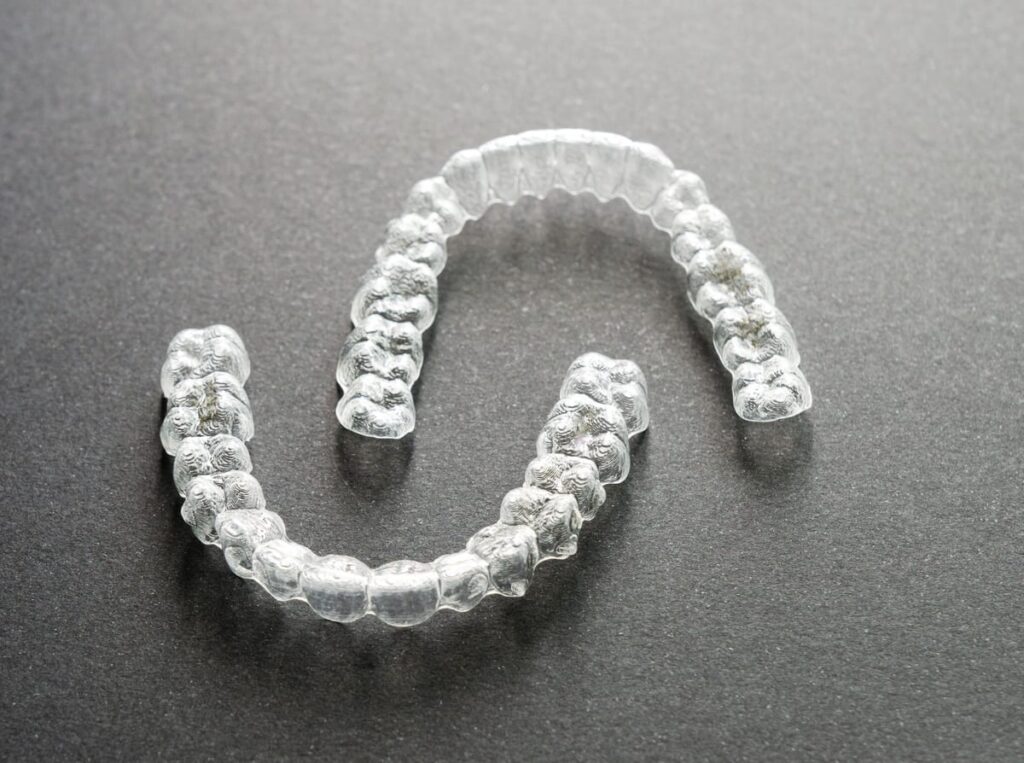
Invisalign uses a series of smooth, custom-fit plastic aligners. Most adults find them far more comfortable day to day. There are no sharp metal edges and no wires to poke soft tissue.
That said, both options cause some pressure and mild discomfort when teeth begin shifting. Neither is completely pain-free. The difference is mostly in the type of discomfort — metal friction versus gentle plastic pressure.
- Braces: Fixed brackets and wires, possible cheek irritation, dietary restrictions
- Invisalign: Removable smooth aligners, no food restrictions, easy to clean
- Both: May cause mild pressure when teeth are actively moving
- Braces: Require special tools to clean around brackets
- Invisalign: Simply remove aligners to brush and floss normally
Visibility and Aesthetics — Why Most Springfield Adults Prefer Invisalign
For most adults, appearance is one of the biggest deciding factors. Metal braces are highly visible and immediately noticeable when you speak or smile. Clear ceramic braces are less obvious but still visible up close.
Invisalign aligners are nearly invisible. Most people around you will not notice you are wearing them at all. This makes Invisalign especially popular with professionals, parents, and anyone who interacts with people regularly in Springfield.
At Kelly Dental of Springfield, Dr. Chase Kelly finds that adult patients consistently rank aesthetics as a top priority. If keeping your treatment discreet matters to you, Invisalign has a clear advantage here.
Clear aligners also allow you to remove them for photos, special events, or important meetings. That flexibility simply does not exist with traditional braces. It adds a meaningful layer of confidence for many adult patients.
Treatment Scope: What Each Option Can and Cannot Fix
This is where honest comparisons get more nuanced. Traditional braces have been used for decades to treat a wide range of orthodontic issues. They are highly effective for complex cases including severe crowding, significant bite problems, and rotations.
Invisalign technology has advanced dramatically in recent years. Modern Invisalign can now treat many of the same conditions that once required braces. Mild to moderate crowding, spacing issues, and even some bite corrections fall well within Invisalign’s current capabilities.
However, very complex cases may still be better suited to traditional braces. Your provider is the best person to assess which system fits your specific clinical needs. Dr. Chase Kelly evaluates each patient individually to recommend the most effective path forward.
- Braces excel at: Severe crowding, complex bite corrections, significant rotations
- Invisalign excels at: Mild to moderate crowding, spacing, aesthetic-priority cases
- Both treat: Overbite, underbite, crossbite (depending on severity)
- Invisalign advantage: Removable for eating, cleaning, and special occasions
- Braces advantage: No compliance requirement — they work whether you think about them or not
Compliance and Commitment: The Adult Reality
Here is something many patients do not consider upfront. Invisalign only works if you wear the aligners. The standard recommendation is 20 to 22 hours per day. That leaves very little time outside of meals and cleaning.
Adults who travel frequently, have busy schedules, or tend to forget to reinsert aligners may find compliance challenging. If you remove your aligners too often, your treatment timeline extends and results suffer.
Traditional braces remove that variable entirely. They are fixed to your teeth and working around the clock. For some adults, that reliability is actually a better fit for their lifestyle.
Be honest with yourself about your habits when discussing this with Dr. Kelly. The best treatment is the one you will actually follow through with consistently. A treatment that fits your life will always outperform one that does not.
Cost Considerations for Adults in Springfield, MO
Cost is a real factor for adult orthodontic patients. In general, Invisalign and traditional braces fall within a comparable price range for most cases. Invisalign used to carry a significant premium, but that gap has narrowed considerably.
The final cost depends on the complexity of your case and the estimated treatment length. Shorter, simpler cases typically cost less regardless of which system you choose. Your consultation with Dr. Chase Kelly will include a full breakdown of your specific treatment plan and associated costs.
Kelly Dental of Springfield offers flexible payment options to make treatment accessible. Straightening your teeth as an adult is an investment in your long-term oral health and confidence. Many patients find the value well worth the commitment.
It is also worth noting that Cosmetic Dentistry Springfield encompasses more than just orthodontics. If you are considering straightening your teeth, Dr. Kelly may also discuss complementary cosmetic options that can enhance your overall smile outcome.
Which Option Is Right for You?
There is no universal answer to the Invisalign vs. braces debate for adults. The right choice depends on your clinical needs, your lifestyle, your aesthetic priorities, and your commitment level. That is why a personalized consultation is essential.
Dr. Chase Kelly takes the time to listen to each patient’s goals and evaluate their specific dental situation. He then presents honest, clear recommendations based on what will actually deliver the best result for that individual.
Adults in Springfield do not have to guess which path is right. A straightforward conversation with an experienced provider makes the decision much clearer. Both systems are excellent — the question is which one is excellent for you.
And remember, maintaining your oral health throughout orthodontic treatment is critical. If you ever experience a dental emergency during treatment, Emergency Dentistry Springfield at Kelly Dental is available to help you quickly and effectively.
Conclusion
Choosing between Invisalign and traditional braces as an adult in Springfield is a meaningful decision. Both options offer real, lasting results when matched properly to the right patient. Factors like comfort, aesthetics, treatment complexity, compliance, and cost all play a role. Dr. Chase Kelly and the team at Kelly Dental of Springfield are here to guide you through every step of that process. Book Now to schedule your appointment with our team.
Frequently Asked Questions
Is Invisalign as effective as braces for adults?
For mild to moderate orthodontic issues, Invisalign is highly effective for adults. Modern aligner technology has expanded significantly and can address many of the same concerns as traditional braces. Complex cases may still require braces, which is why a professional evaluation with Dr. Chase Kelly is the best starting point.
How long does Invisalign treatment take for adults in Springfield?
Treatment length varies depending on the complexity of your case. Many adult patients complete Invisalign treatment in 12 to 18 months. Simpler cases may take less time, while more involved corrections may take longer. Your specific timeline will be outlined during your consultation at Kelly Dental of Springfield.
Can I eat normally with Invisalign?
Yes. One of the most practical benefits of Invisalign is that you remove the aligners before eating and drinking anything other than water. This means no food restrictions whatsoever. With traditional braces, you need to avoid sticky, hard, or chewy foods that could damage the brackets and wires.
Do braces or Invisalign hurt more?
Both options cause some discomfort when teeth are actively moving. Braces can cause soreness after adjustments and occasional irritation from metal components. Invisalign causes mild pressure when you switch to a new set of aligners. Most adults describe Invisalign as the more comfortable day-to-day experience, though individual experiences vary.
What happens after orthodontic treatment — braces or Invisalign?
After completing either treatment, retention is essential to keeping your results. Most patients wear a retainer after finishing braces or Invisalign. Without a retainer, teeth can gradually shift back toward their original positions. Dr. Chase Kelly will provide clear guidance on your retention plan as part of your complete orthodontic care at Kelly Dental.