


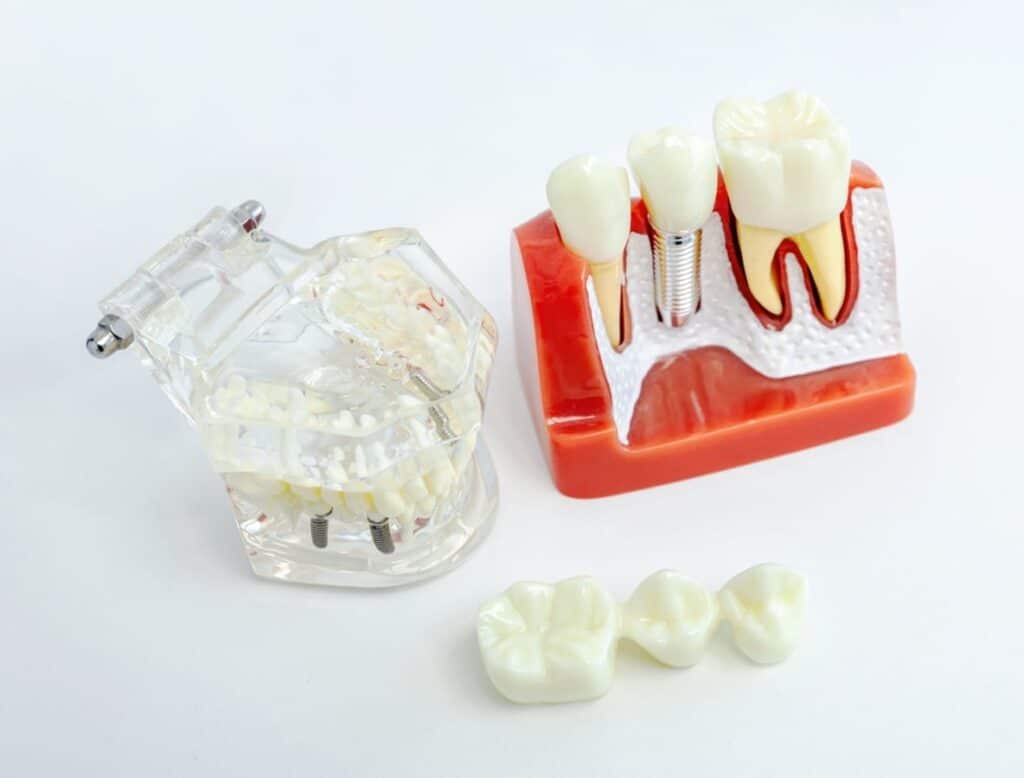
When patients in Springfield lose multiple teeth, two options come up most often: All-on-4 dental implants and traditional dentures. The question we hear constantly at Kelly Dental of Springfield is simple — which one actually lasts longer? Understanding the difference between All-on-4 implants vs. dentures is one of the most important decisions you can make for your long-term oral health. Dr. Chase Kelly and our team want to help you make that choice with clear, honest information.
All-on-4 Implants vs. Dentures: Understanding the Basics in Springfield
All-on-4 dental implants use four titanium posts anchored directly into your jawbone. These posts support a full arch of permanent replacement teeth. Traditional dentures, by contrast, sit on top of your gums and rely on suction or adhesive to stay in place. Neither solution is one-size-fits-all, and the right choice depends on your health, bone density, and daily lifestyle.
Dental Implants Springfield represent a long-term investment in your smile and jaw health. They fuse with the bone over time through a process called osseointegration. This makes them feel and function much more like natural teeth. Dentures can be a faster, more accessible starting point for some patients.
Both options restore your ability to chew and speak with confidence. But they differ significantly in how long they last, how much maintenance they require, and how they affect your jawbone over time. Knowing these differences helps Springfield patients make a truly informed choice.
How Long Do All-on-4 Implants Actually Last?
All-on-4 implants are designed to be a permanent solution. The titanium posts themselves can last a lifetime with proper care. The prosthetic arch on top may need to be replaced or adjusted after 10 to 20 years, depending on wear. Overall, this makes All-on-4 implants a significantly longer-lasting investment than traditional dentures.
Here are the key longevity advantages of All-on-4 implants:
- Titanium posts can last decades — often a lifetime
- They preserve jawbone and prevent the bone loss that follows tooth loss
- No daily removal or adhesive maintenance required
- They do not shift or loosen over time the way dentures do
- With regular dental checkups, they retain function and appearance for many years
Dr. Chase Kelly often explains that the implant posts are the foundation. Keep that foundation healthy, and the results last far longer than any removable appliance.
How Long Do Traditional Dentures Last in Comparison?
Standard dentures typically last between five and ten years before they need replacement. Your gum tissue and jawbone change shape over time. This causes dentures to fit poorly and require relining or replacement. Bone loss accelerates after tooth loss, which speeds up this change in fit.
Here is what Springfield denture wearers commonly experience over time:
- Dentures loosen as the jawbone shrinks beneath them
- Eating tough or crunchy foods becomes increasingly difficult
- Adhesives become necessary and can feel messy or unreliable
- Gum irritation and sore spots develop from an ill-fitting appliance
- Replacement costs accumulate over the years
It is worth noting that implant-supported dentures exist as a middle-ground option. They attach to implants for better stability. However, they still involve a removable component and do not offer the full permanence of All-on-4 implants.
Which Option Is Right for Your Situation?
The right choice depends on several personal factors. All-on-4 implants require adequate jawbone density for the posts to anchor successfully. Patients with significant bone loss may need a bone graft before implant placement. Dr. Chase Kelly evaluates each patient individually at Kelly Dental of Springfield before recommending any treatment path.
All-on-4 implants tend to suit patients who:
- Want a permanent, fixed solution with no removal required
- Value long-term durability over a lower upfront cost
- Have sufficient bone density or are willing to explore bone grafting
- Want to preserve their jawbone health long-term
Traditional dentures may be a better starting point for patients who:
- Need a faster turnaround to restore function quickly
- Have significant bone loss that makes implants more complex
- Prefer to delay a surgical procedure for personal health reasons
Neither option is inferior by default. The best choice is the one that fits your health, lifestyle, and goals. A thorough consultation gives you the personalized guidance you need.
What to Expect From the All-on-4 Process at Kelly Dental of Springfield
The All-on-4 process begins with a detailed evaluation. Dr. Chase Kelly reviews your dental and medical history, takes 3D imaging, and assesses your bone structure. If you qualify, the four implant posts are placed in a single surgical appointment. A temporary prosthetic arch is often attached the same day.
Here is a simplified overview of the All-on-4 process:
- Comprehensive consultation and imaging with Dr. Kelly
- Implant placement surgery under local anesthetic or sedation
- Healing period of three to six months for osseointegration
- Placement of the final permanent prosthetic arch
- Ongoing maintenance with regular cleanings and checkups
Recovery takes time, but most patients find the results life-changing. Speaking and eating feel natural again. There is no adhesive, no nightly removal, and no worry about slippage in public. For Springfield patients comparing All-on-4 implants vs. dentures long-term, this quality-of-life difference is often the deciding factor.
If you ever experience a dental emergency during your implant healing process, know that Emergency Dentistry Springfield is available at Kelly Dental to help you quickly and safely.
Making the Right Long-Term Choice for Your Smile
When comparing All-on-4 implants vs. dentures for Springfield patients, the longevity advantage clearly favors implants. Titanium posts that last a lifetime, preserved jawbone, and a fixed non-removable arch make All-on-4 a superior long-term solution for most healthy candidates. Dentures remain a valid option for certain situations, but they require more frequent replacement and ongoing adjustments.
The most important step is getting a professional evaluation from Dr. Chase Kelly. Every patient’s bone structure, health history, and goals are different. A personalized plan ensures you invest in the solution that will serve you best for decades to come.
At Kelly Dental of Springfield, we believe informed patients make confident decisions. We take the time to explain every option, answer every question, and support you through every stage of your care. Book Now to schedule your appointment with our team.
Frequently Asked Questions
How long do All-on-4 implants last compared to dentures?
All-on-4 implants are designed to last a lifetime with the titanium posts permanently fusing to the jawbone. The prosthetic arch may need updating after 10 to 20 years. Traditional dentures typically last five to ten years before they need relining or replacement due to changes in jaw shape.
Are All-on-4 implants a better long-term value than dentures?
For many patients, yes. Although All-on-4 implants have a higher upfront cost, they tend to cost less over a lifetime because they do not require frequent replacement. They also prevent jawbone loss, which can reduce the need for future dental work caused by bone shrinkage.
Can anyone in Springfield get All-on-4 implants?
Not every patient is an immediate candidate. Sufficient jawbone density is needed to anchor the implant posts. Dr. Chase Kelly performs a thorough evaluation including 3D imaging to determine candidacy. Some patients with bone loss may qualify after a bone grafting procedure.
Do All-on-4 implants feel like real teeth?
Most patients describe All-on-4 implants as feeling very close to natural teeth. They are fixed in place, so there is no movement during speaking or eating. Over time, patients report that they stop thinking about their replacement teeth entirely because they function so naturally.
What happens if I already have dentures — can I switch to All-on-4 implants?
Yes, many denture wearers successfully transition to All-on-4 implants. Dr. Chase Kelly evaluates your current bone density and oral health to determine if implant placement is possible. Patients who have worn dentures for a long time may have experienced some bone loss, which is assessed during your consultation at Kelly Dental of Springfield.