


Losing a tooth is stressful. Choosing how to replace it can feel even more overwhelming. When weighing dental implants vs. dentures vs. bridges, Springfield patients face real trade-offs around cost, comfort, and long-term results. At Kelly Dental of Springfield, Dr. Chase Kelly helps patients understand all three options clearly. This guide breaks down each choice so you can make a confident, informed decision for your smile.
Understanding Your Three Main Tooth Replacement Options in Springfield
Before comparing, it helps to understand what each option actually involves. Each solution works differently in your mouth and serves different needs.
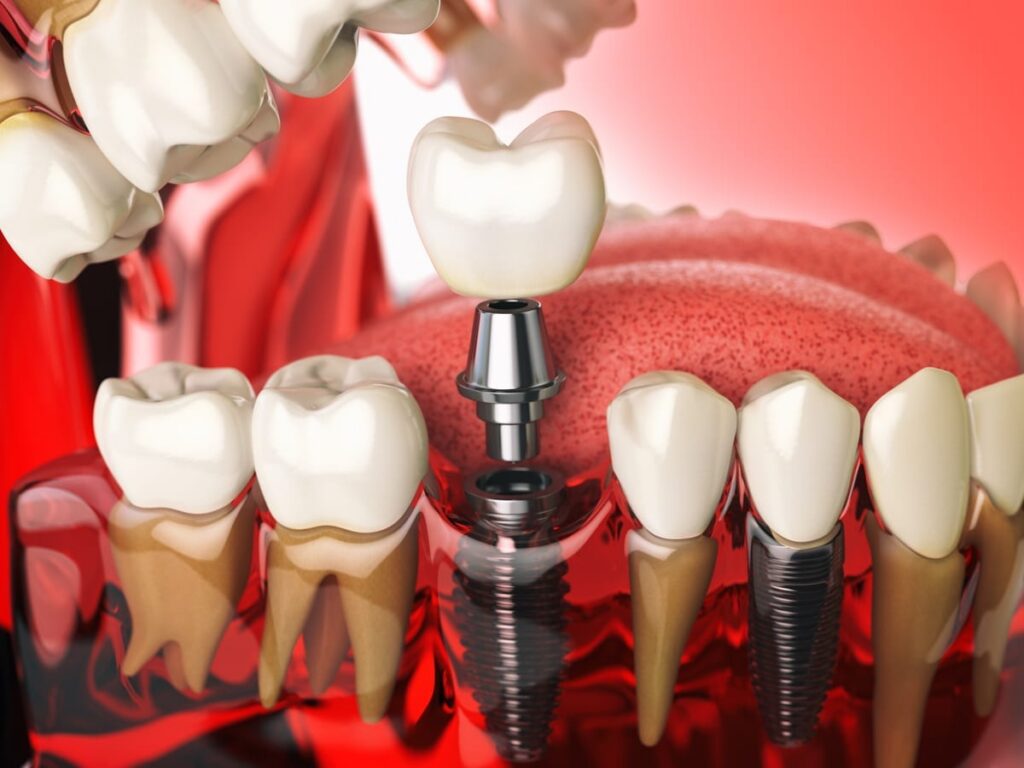
Dental implants are titanium posts placed directly into the jawbone. They act as artificial tooth roots and support a crown on top. They look, feel, and function like natural teeth.
Dental bridges use two crowned teeth on either side of a gap to anchor a false tooth in between. They are fixed in place and do not require surgery.
Dentures are removable appliances that replace multiple missing teeth. Full dentures replace an entire arch. Partial dentures fill gaps when some natural teeth remain.
- Implants: Surgically placed, permanent, bone-preserving
- Bridges: Fixed, non-surgical, relies on adjacent teeth
- Dentures: Removable, non-surgical, replaces many teeth at once
Dental Implants vs. Dentures vs. Bridges: Comparing Longevity and Daily Function
One of the biggest differences between these options is how long they last. Durability matters a lot when you are making a long-term investment in your health.
Dental implants can last a lifetime with proper care. The crown on top may need replacement after 15 to 20 years. The implant post itself rarely needs changing.
Bridges typically last 10 to 15 years. They may need replacement as surrounding teeth shift or wear down over time. Proper brushing and flossing under the bridge extend its lifespan.
Dentures generally need adjustment or replacement every 5 to 8 years. As your jawbone changes shape, dentures can become loose and less comfortable. Ill-fitting dentures can affect eating and speaking.
- Implants preserve jawbone density, preventing facial sagging
- Bridges require no removal but demand careful cleaning underneath
- Dentures may slip during eating or speaking without adhesive
- All three options improve chewing compared to leaving a gap
Which Option Best Fits Your Specific Situation?
The right choice depends on your unique health profile and goals. There is no single answer that works for every Springfield patient.
Dental implants are often best if you have lost one or a few teeth, have healthy jawbone density, and want a permanent solution. They are also ideal for patients who want to avoid altering healthy adjacent teeth. Dr. Chase Kelly offers both Single Tooth Implants and All-on-4 Dental Implants for more extensive tooth loss.
Bridges work well if you are missing one or two teeth and already have crowns or damage on the neighboring teeth. They are also a good fit if surgery is not recommended for your health situation.
Dentures are often the right fit if you are missing most or all of your teeth. They are also a practical choice when bone loss makes implants more complex without prior bone grafting.
Your overall oral health, bone condition, and personal preferences all play a role. Dr. Kelly evaluates each patient individually before recommending a path forward.
The Real Cost Comparison: Short-Term vs. Long-Term Value
Many patients focus on upfront cost when comparing these options. However, long-term value often tells a different story.
Implants typically have higher initial costs than bridges or dentures. But because they last longer and preserve bone, they often prove more cost-effective over a decade or more. You avoid repeated replacements and adjustments.
Bridges carry a moderate upfront cost. However, they require the reshaping of two healthy neighboring teeth. If those teeth develop problems later, costs can increase significantly.
Dentures have lower starting costs but come with ongoing expenses. Adhesives, relining, and eventual replacement add up. Bone loss over time may also lead to additional dental work.
Thinking about the 10 or 20-year picture helps Springfield patients make smarter decisions. Dr. Kelly walks through expected costs honestly so there are no surprises down the road.
What to Expect During Your Consultation at Kelly Dental of Springfield
Starting the process is simpler than most patients expect. Dr. Chase Kelly and the team at Kelly Dental make it easy to explore your options.
At your first appointment, Dr. Kelly reviews your dental and medical history. He takes X-rays to evaluate jawbone health and the condition of remaining teeth. This information guides the recommendation that fits your situation best.
If implants are the right choice, you will receive a full treatment timeline. If a bridge or denture suits you better, Dr. Kelly explains every step of that process too. No option is pushed — only what genuinely fits your needs.
If you have had a dental emergency recently, such as a knocked-out or broken tooth, prompt evaluation is especially important. Emergency Dentistry Springfield services at Kelly Dental ensure you get fast, expert care when timing matters most.
For patients also considering smile improvements alongside tooth replacement, Cosmetic Dentistry Springfield options can be combined with implants or bridges for comprehensive results.
Choosing between dental implants, dentures, and bridges is a major decision. You deserve straightforward guidance from a dentist who listens. Dr. Chase Kelly at Kelly Dental of Springfield is here to help you find the right fit for your smile, your health, and your lifestyle. Book Now to schedule your appointment with our team.
Frequently Asked Questions
Are dental implants painful to get in Springfield?
Most patients report less discomfort than they expected. Dr. Kelly uses local anesthesia during the procedure to keep you comfortable. Mild soreness after placement is normal and typically resolves within a few days. Over-the-counter pain relief is usually all that is needed during recovery.
Can I get implants if I already wear dentures?
Yes, in many cases. All-on-4 Dental Implants are specifically designed for patients with significant tooth loss who currently wear dentures. Dr. Kelly evaluates your jawbone density to determine whether implants are a good fit. Bone grafting may be recommended first if bone loss is significant.
How long does it take to get a dental bridge in Springfield?
A traditional dental bridge usually requires two appointments spaced a few weeks apart. At the first visit, neighboring teeth are prepared and impressions are taken. A temporary bridge protects the area while your permanent bridge is crafted. The second visit places and adjusts the final bridge.
Do dentures affect the way I speak or eat?
There is typically an adjustment period when you first start wearing dentures. Speaking and eating may feel different for a few weeks as your mouth adapts. Most patients adjust fully within one to two months. Well-fitted dentures from an experienced dentist minimize these challenges significantly.
What makes dental implants the preferred long-term choice for many patients?
Implants are the only tooth replacement option that preserves jawbone by stimulating it like a natural root. This prevents bone loss and the facial changes that often come with it. They also do not rely on surrounding teeth for support, keeping healthy teeth intact. For patients who qualify, implants deliver the most natural and lasting result.